

How to paint kitchen cabinet doors and furniture
How to paint kitchen cabinet doors and furniture so the paint adheres and lasts: degreasing, sanding down, primer and 2 thin coats of durable wood paint.
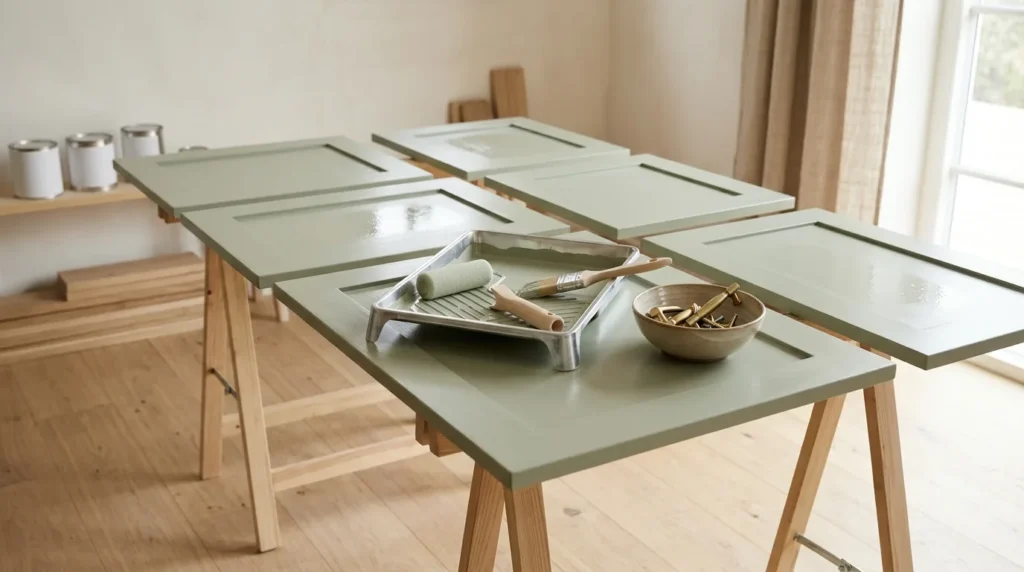
Freshly painted kitchen doors can give you a completely new kitchen for a fraction of the price. The same goes for old furniture. The key is getting the paint to adhere to smooth and greasy surfaces. Here’s how to do it.
In short
- Remove doors and handles, and number them.
- Degrease thoroughly – kitchen grease is paint’s worst enemy.
- Sand matt surfaces, and prime smooth surfaces such as laminate, film and lacquered wood with adhesion primer.
- Apply 2 thin coats of durable wood paint, and allow the paint to cure before using the doors.
What you’ll need
- Caparol Adhesion Primer – primer for smooth and difficult surfaces
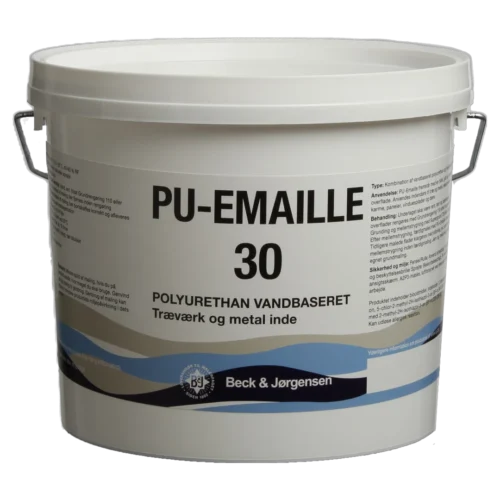
- Durable wood paint, such as Caparol PU Satin or B&J PU-Enamel 30 (both gloss 30 and can be tinted)
- A super-smooth wood roller and a good brush
- Sandpaper in grit around 180–240
- Acrylic filler for damage and any old handle holes
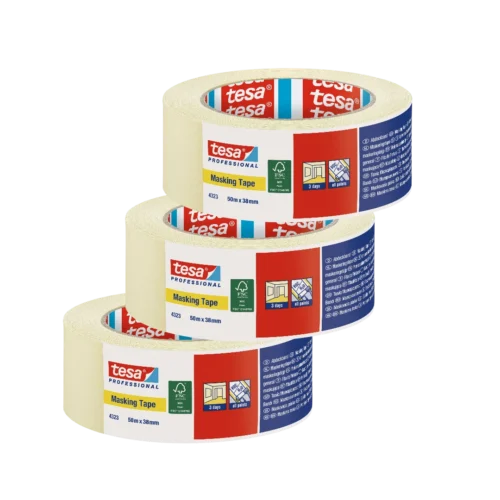
- Masking tape, degreaser and cloth
How to do it
1. Remove and number
Unscrew the doors, drawer fronts, handles and hinges. Number the doors with a piece of tape so you know where they go. It’s much easier to paint the doors when they’re lying flat on a pair of trestles.
2. Degrease
Wash all surfaces thoroughly with a degreasing cleaner – including the backs and edges. Rinse with clean water and allow to dry.
3. Repair and sand
Fill any damage and old screw holes with acrylic filler. Sand all surfaces matt with fine sandpaper. The aim is not to remove the surface, but to make it rough enough for the primer to adhere. Dust thoroughly.
4. Prime with adhesion primer
Laminate, film, melamine and glossy lacquered wood need adhesion primer. Apply a thin, even coat. Caparol Adhesion Primer can be overpainted with water-based paint after 12–16 hours.
5. Apply first coat
Roll the paint out with the super-smooth roller, and lightly brush over with a brush in the direction of the wood grain. Paint profiles and edges with a brush. Paint thinly – this gives the smoothest finish.
6. Sand between coats and apply second coat
When the first coat is dry (approximately 8 hours for Caparol PU Satin and B&J PU-Enamel 30), sand very lightly with fine sandpaper to remove dust particles. Wipe down and apply the second coat.
7. Allow the paint to cure
The paint will be dry after a few hours, but needs to cure for several days before it reaches full durability. Hang the doors carefully and avoid heavy cleaning for the first few weeks.
Tips and common mistakes
- The most common mistake is failing to degrease. Paint won’t adhere to kitchen grease.
- Don’t skip the primer on smooth surfaces – the paint can peel off at the first scratch.
- Paint in a dust-free room and wipe the surface with a slightly damp cloth just before painting.
- Test the colour on the back of a door before painting the whole kitchen.
Frequently asked questions
Can I paint laminate and film-coated doors?
Yes, with the right preparation: degreasing, light sanding and a primer designed for smooth surfaces.
Which gloss level is best for kitchen doors?
Gloss 30 is a good choice. It’s durable and easy to keep clean without highlighting imperfections too much.
How long does it take?
Allow 2–3 days including drying time for a typical kitchen – and a few days’ curing before the doors can handle heavy use.
Products from the guide
-
 Caparol
 Adhesion Primer White – Primer for Furniture
From 329,00 kr. In stock -
 Caparol
 PU Satin, Wood Paint
From 339,00 kr. In stock -
 Beck & Jørgensen
B&J PU-Enamel 30, Wood Paint
From 349,00 kr. In stock - −20%
 Spectrum
Spekter Superglat Paint Roller Set 10 cm – Woodwork Roller
Original price was: 99,00 kr..79,00 kr.Current price is: 79,00 kr.. In stock -
 Anza
Anza Platinum window brush set
239,00 kr. In stock -

Sandpaper 5 Metre
From 109,00 kr. In stock -
 Dana adhesive
Acryl Filler Fine
99,00 kr. In stock - −23%
 Tesa
Tesa 3 Pack 38mm Masking Tape
Original price was: 115,00 kr..89,00 kr.Current price is: 89,00 kr.. In stock
More guides
 PaintHow to paint agricultural machinery and metal with machine enamelSådan maler du traktorer, redskaber og metal med EFApaint maskinemalje: rengøring, rustbehandling, maskinprimer og 2 lag maling – eller Efaspray til reparationer.
 PaintHow to paint a floor – concrete and woodSådan maler du et beton- eller trægulv: tjek fugt, rengør og affedt, slib, og mal 2 lag med den rigtige gulvmaling. Med…
 PaintHow to fill a wallSådan spartler du en væg: forskellen på plet- og fuldspartling, hvilken spartel du skal bruge, armeringstape ved revner og slibning før maling.