


How to paint a floor – concrete and wood
How to paint a concrete or wooden floor: check moisture, clean and degrease, sand, and apply 2 coats with the right floor paint. With advice on epoxy for garages and workshops.
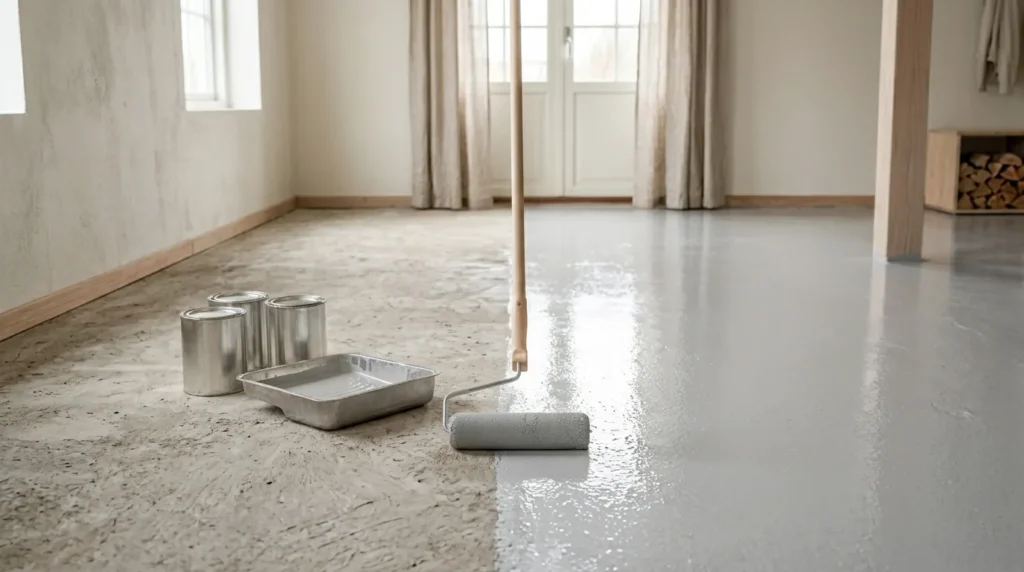
A painted floor surface in a basement, garage, utility room or workshop is easy to keep clean and gives the room a completely new look. Floor paint needs to withstand foot traffic, so the preparation is even more important than on a wall. Here’s how to do it for both concrete and wooden floors.
In brief
- The floor must be clean, grease-free, dry and sound – loose paint and cement laitance must be removed.
- Smooth and glossy surfaces should be sanded so the paint can adhere.
- Apply 2 coats (or more) of floor paint, and observe the waiting time between coats.
- Wait before walking on the floor – and especially before placing heavy furniture and vehicles – until the paint has cured.
Which floor paint should I choose?
| Floor | Recommendation | Example at Kvali |
|---|---|---|
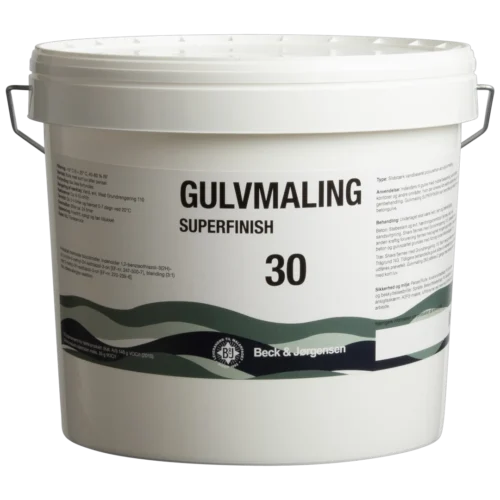
| Concrete and wooden floors in homes, basements and utility rooms | Water-based floor paint (1-component) | B&J 283 Floor Paint Superfinish |
| Wooden floors indoors | Floor paint for wood | Beckers Floor Paint Wood gloss 35 |
| Garage, workshop and heavily trafficked floors | 2-component epoxy | Hagmans EP-V Floor Paint |
How to do it
1. Check the substrate
New concrete must be completely dry and typically needs at least 4 weeks before it can be painted. If you’re unsure about moisture, tape a piece of plastic film to the floor for 24 hours: if there’s condensation under the film, the floor is too damp to paint. Old painted floors can be repainted if the old paint is firmly adhered.
2. Clean and degrease
Sweep and vacuum thoroughly. Wash the floor with a degreasing cleaner – especially in garages and workshops, where oil and grease prevent the paint from adhering. Rinse with clean water and let the floor dry completely.
3. Sand and repair
Scrape off loose paint, and sand glossy surfaces – both old paint and smooth concrete – to a matt finish with sandpaper or a floor sanding machine. Fill holes and cracks in concrete before painting. Vacuum thoroughly afterwards.
4. Mask and prepare
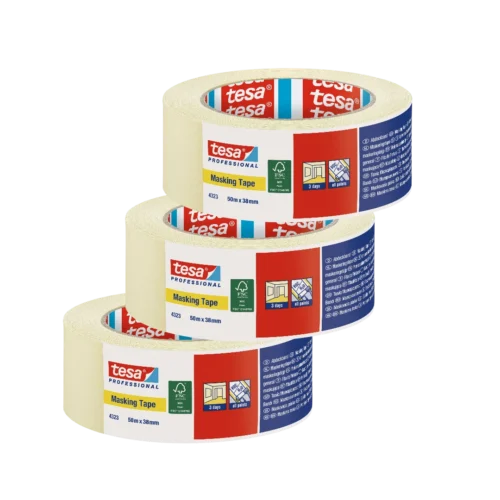
Mask walls and skirting boards with masking tape. Plan where you’ll start so you finish at the door and don’t paint yourself into a corner.
5. Apply the first coat
Cut in along the walls with a brush, and roll the rest with a floor roller on an extension pole. Paint in manageable sections, working wet into wet. On absorbent concrete, many manufacturers recommend thinning the first coat – follow the instructions on the tin.
6. Apply the second coat
Observe the waiting time between coats. For B&J 283 it’s at least 24 hours at 20 °C, and for Beckers Floor Paint Wood approximately 8 hours. Apply the second coat in the same way. Heavily trafficked floors can benefit from a third coat.
Epoxy: how to work with 2-component paint
- Epoxy consists of two parts that you mix just before use. Mix thoroughly according to the instructions.
- The mixture has a limited pot life – only mix the amount you can use.
- Ensure good ventilation and wear gloves.
- Epoxy provides a very hard and glossy surface that resists chemicals and tyre marks better than ordinary floor paint.
Helpful tips and common mistakes
- The most common mistake is inadequate cleaning – paint won’t adhere to oil, grease and dust.
- Don’t paint below 10 °C, and avoid underfloor heating running whilst you’re painting.
- Thick coats dry poorly and become soft. Paint several thin coats instead.
- Use felt pads under furniture and wait until the paint has cured before laying carpets.
- Outdoors or in unheated rooms, moisture from the ground can cause the paint to peel. Check the moisture conditions first.
Frequently asked questions
How long before I can walk on the floor?
Light traffic is typically possible after 24 hours, but full curing takes longer – usually around a week. See the drying and curing times on the tin.
Can I paint a floor that has previously been varnished or oiled?
A varnished floor can be painted once the varnish has been sanded matt. Oiled and waxed floors must be sanded down to bare wood, otherwise the paint won’t adhere.
How much floor paint do I need?
Allow for 6–10 m² per litre per coat depending on the product and substrate. A 20 m² floor with 2 coats typically requires 4–7 litres. The coverage is stated in the product description.
Can floor paint be tinted?
Yes, many floor paints can be tinted in a wide range of colours – for example B&J 283 and Beckers Gulvmaling Træ.
Products from the guide
-
 Beck & Jørgensen
B&J 283 Floor Paint Superfinish Gloss 30
From 319,00 kr. In stock -
 Beckers
 Floor Paint Wood Gloss 35
From 299,00 kr. In stock -
 Hagmans
 EP-V Floor Paint
From 369,00 kr. In stock -
 Anza
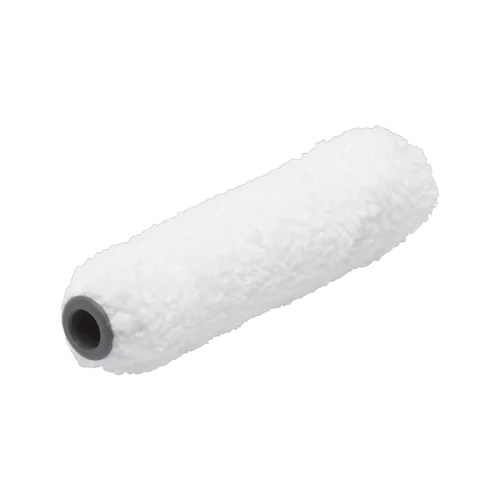
Anza X3 Superior HiCap 15 cm, floor roller
35,00 kr. In stock - Anza
Anza X3 Superior HiCap 10 cm, floor roller
25,00 kr. In stock -

Sandpaper 5 Metre
From 109,00 kr. In stock - −23%
 Tesa
Tesa 3 Pack 38mm Masking Tape
Original price was: 115,00 kr..89,00 kr.Current price is: 89,00 kr.. In stock -

Paint roller tray – 14 litre
69,00 kr. In stock
More guides
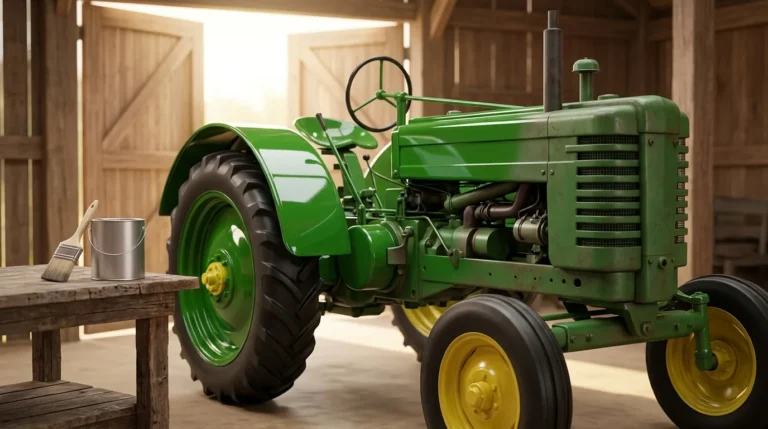 PaintHow to paint agricultural machinery and metal with machine enamelSådan maler du traktorer, redskaber og metal med EFApaint maskinemalje: rengøring, rustbehandling, maskinprimer og 2 lag maling – eller Efaspray til reparationer.
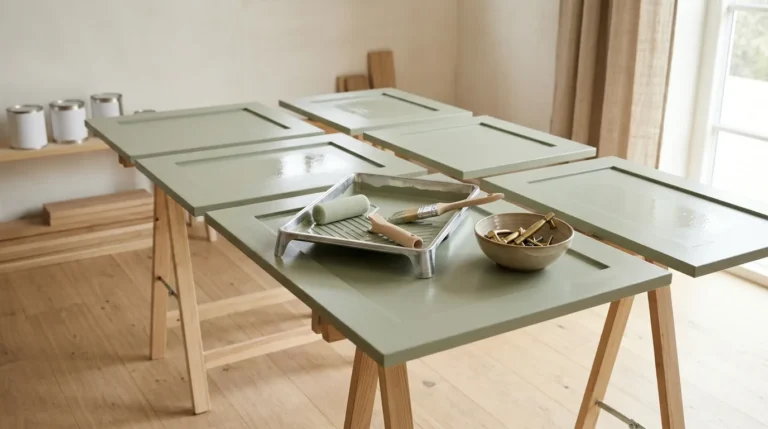 PaintHow to paint kitchen cabinet doors and furnitureSådan maler du køkkenlåger og møbler, så malingen hæfter og holder: affedtning, matslibning, hæfteprimer og 2 tynde lag slidstærk træmaling.
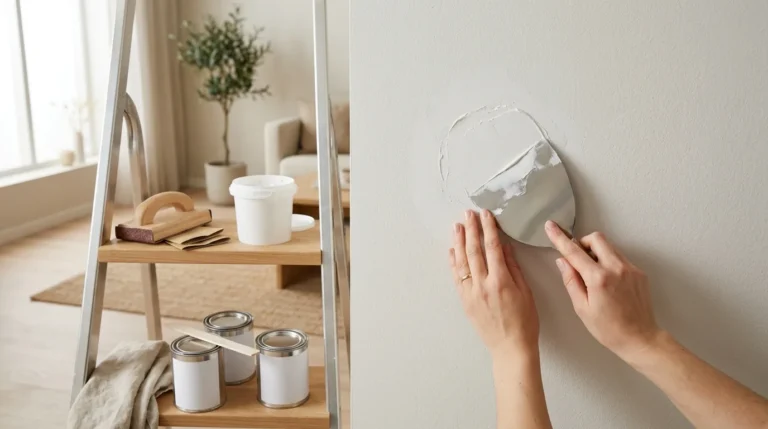 PaintHow to fill a wallSådan spartler du en væg: forskellen på plet- og fuldspartling, hvilken spartel du skal bruge, armeringstape ved revner og slibning før maling.